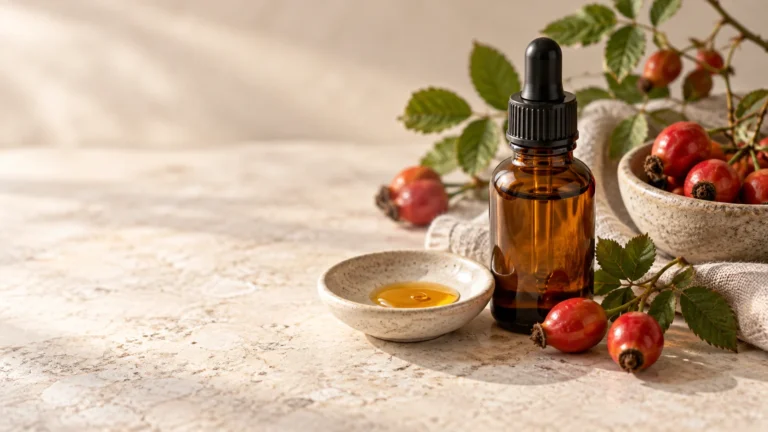
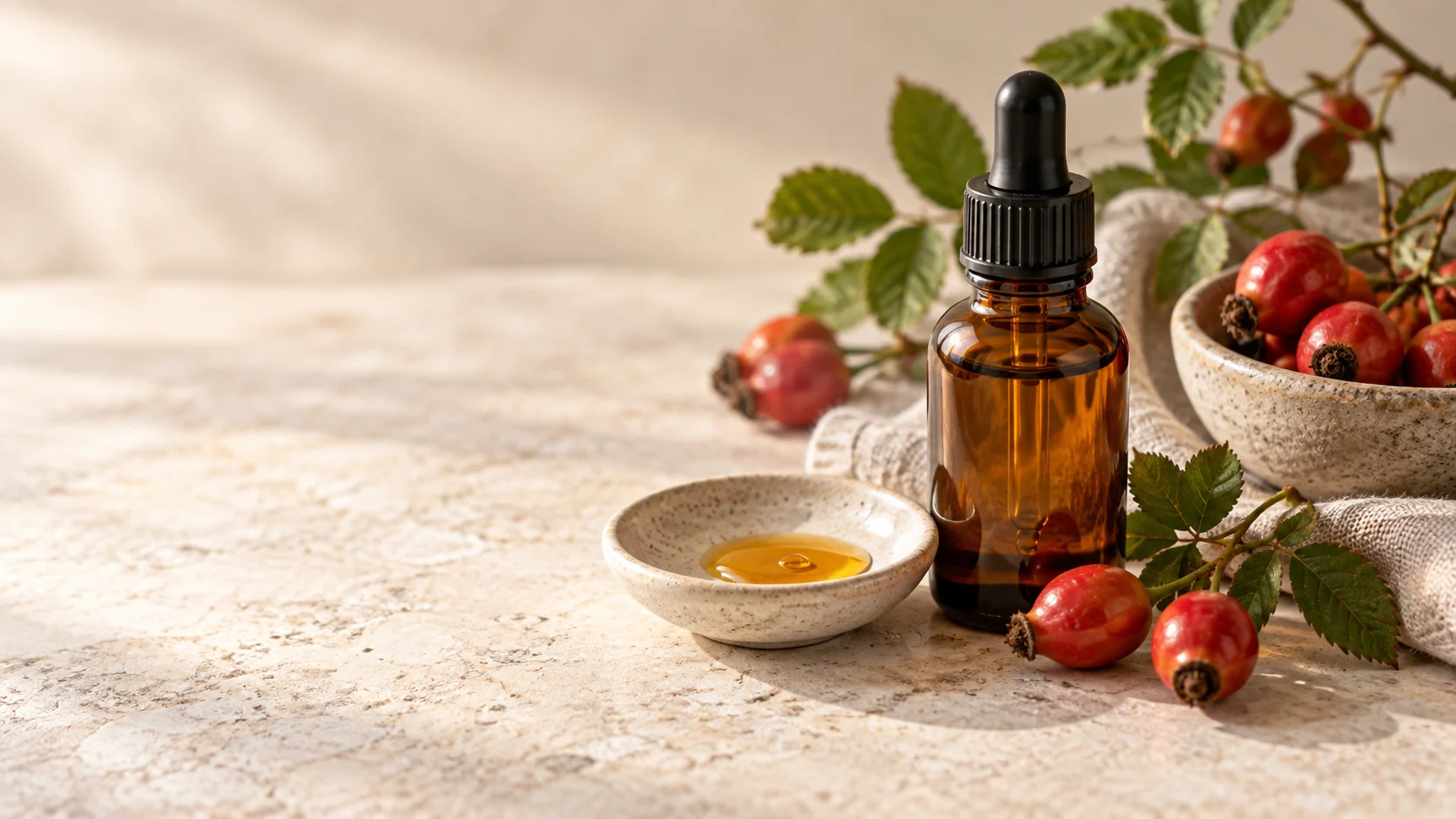
Short answer: Rosehip oil is a plant-derived facial oil used by many people as part of a simple moisturizing ritual. Apply a small amount to clean skin according to the product directions, patch test first, and avoid treating an oil as a cure for a skin concern.
Face oils are about more than a trend. They can add a slow, sensory step to a routine, especially when you enjoy botanical textures and a few quiet minutes at the sink.
Last updated: September 2026
What is rosehip oil?
Rosehip oil is made from parts of the rosehip fruit. You may see rosehip seed oil or rosehip oil on a label. The source, extraction method, freshness, packaging, and full formula all matter, so read the product information rather than relying on a single phrase.
What does “cold pressed” mean?
Cold pressed generally describes an extraction approach that uses mechanical pressure without intentionally using high heat as the main extraction method. It is useful information, but it does not guarantee a product will suit every person. The formula, storage, and your own skin response still matter.
How to apply face oil
- Cleanse with a product that feels comfortable and pat dry.
- Apply any water-based steps your routine already uses, following their directions.
- Warm one or two drops between clean fingertips.
- Press gently over the areas you want to moisturize; avoid the eye area unless the product specifically allows it.
- Use sunscreen in the daytime as appropriate for your routine.
Start with less. An oil can feel beautiful in a small amount and heavy in a large one. A slow application also helps you notice whether the scent or finish feels right.
Rosehip oil as a moisturizer
Some people use rosehip oil as their final moisturizing step, while others layer it over a cream. Neither approach is automatically correct. Choose based on the product directions, your texture preference, and how your skin feels.
D’Amira’s Natural Oils collection includes botanical face-care options, including the Herbal + Chaga Facial Oil. That product is not a rosehip oil, so review its own ingredient list and directions rather than assuming all botanical oils work the same way.
Patch testing and skin comfort
Patch test a new product as directed and wait before making it a daily step. Stop using it if you notice irritation. “Natural” does not mean risk-free, and a face oil is not a treatment for a diagnosed condition. For general information, the FDA cosmetics resource is a useful starting point.
Keep the routine simple
You do not need several oils at once. Start with one product, use it consistently, and record what you notice about texture, scent, and comfort. If you want the full foundation first, read D’Amira’s non-toxic skincare routine.
A botanical moment, not a promise
Explore D’Amira’s botanical face oils and choose the option whose ingredients and directions feel clear enough to become part of your real life.
Suspendisse egestas fringilla elit, in sagittis metus euismod at. Morbi nunc lorem, posuere sed dui id, interdum congue quam. Donec a mi vehicula, bibendum tortor cursus, ultricies sapien. Aliquam lobortis sollicitudin rutrum. Nunc quis massa ultrices, viverra neque nec, pharetra turpis.